Keep Loving

I’ve often heard that what grows most prevalent around you may be what you need. Every year for the past twenty-five I’ve witnessed Nature’s care taking of my chosen home. Every year battles wage with unwanted invasives that if left unchecked upend the natural ecosystem. And then there are sweet victories when the cleared space allows the original wonders to emerge. I’m not one for chemical herbicides; the clearing of unwanteds is a labor of love. 

A visiting Mapuche elder once walked the land and told me, “As this land heals you’ll see purple flowers everywhere.” Healing has its own deep roots. Did she mean healing from the clear-cutting decades before, or was she referring to the disregard so many have for the land we inhabit, for the land that holds us and nourishes us? The amazing trees that shade us from intense heat and whose dead trunks and branches keep our fires going in winter. The delicious “weeds”, so bountifully given, from nettles to lamb quarters, purslane and others will always keep hunger at bay. Along with chicory and blackcaps that are springing up everywhere, there are the precious elderberry. (Elderberry tonic has been my go-to through the biting winters to maintain good health).

An honorable mention must also be given to the mushrooms that coexist with us; and the eager black walnuts that insist on expanding their territory even though they are forbidden in the apple orchard. (Black walnut’s roots have a knack of poisoning apple trees and other plants, but the early leaves make a great de-wormer for my sheep and their nuts are delicious, their wood is exquisite and so we co-exist).

It’s an amazing gift this natural world.

This year, if the buds on the monarda plants have their way, the landscape will be a sea of purple. Monarda or bee balm is a wonderful anti-inflammatory. Native to Wisconsin it has been heralded as helpful with digestion and with coughs. And it’s a beautiful pollinator plant; just ask the bees.

What has all this taught me? The land, like all else, thrives on love. Keep loving.

Staying Human

Life sometimes takes turns that require decisive attention and action.  When you have chickens, you can count on it.

We have free range chickens, really free range. They lay eggs in the darndest places and then the game of hide and seek is on. Because if we don’t find them, a predator will. And of course, there are hens who trick us and find a way to sit on five to fifteen eggs that we hadn’t found. We figure this out when the hen doesn’t make it back to the coop at night. And then the hunt is on, this time with a dog kennel in tow. 

One hen had been sitting on eggs inside a kennel for way too long, but she wouldn’t give up. We knew the eggs could not be viable, but her insistence made us slip another few eggs under her. One determined fellow finally made it out of the shell, which, from what I can tell, is no easy feat. The mama is completely devoted to its presence and it is a delight to watch.

And of course, there was the hen who decided to roost inside the coop high on the rafters. Every day we looked for a chick that might have fallen, but this mom was on it. Two chicks hatched and somehow landed softly. Mama hen took them outside and with little coaching walked them into a tiny coop set up for them. A couple eggs that had been left behind in the rafter were put near her. One never knows if the hen will accept an egg, but this mama ever so gently used her beak to pull them under her belly and into the warmth required to hatch. And voila, by morning there were four little chicks parading in the coop. 

But wait, there’s more in this busy week. Another hen didn’t come home and a storm was on the way. We had scoped out a nest of eggs and sure enough she was there, stone faced and determined. Luckily, we have many dog kennels. She was scooped up along with her fifteen eggs just before the all-night rain. In a few weeks, another brood will be enjoying their freedom.

There is joy in witnessing their effort, determination, and caring. They are brilliantly who they are meant to be and when permitted they teach us compassion and resourcefulness. So we’ll keep learning from and with them; staying sane and being human.

Enjoy the miracles that aren’t really miracles, my friends. It is simply life unfolding.

Waking With the Sun

As Solstice draws near.

There are certain things I wish for you, for all of you. I wish that you will know the joy of waking with the sun. Of hearing the sweet morning songs of birds letting us know they made it through the night. Of watching deer saunter with their fawns in toe. Of checking on fruit of trees to see how the harvest might be. I wish for you the peacefulness of resting in the evening, contented with another day of loving. I wish for you to sleep, as if you are in the arms of your Eternal Mother, with confidence that you are loved. And should your sleep be disturbed let it be by the brilliance of a moon that calls you to behold its beauty or by the stars teaching us we are never alone.

I wish these things and so much more for you. And more than this, because these are just the finite musings of one heart. I wish that you find fulfillment in your every waking moment in whatever path you choose.

It’s in loving that we learn who we are. It’s in the pursuit of heaven on earth that we are given the opportunity to co-create with all of life. And when others speak of God, you will not have to define the term or accept anyone’s creed, because you will be at rest in your own Knowing.

These are my wishes for you.  That counting your blessings with each passing breath is not a challenge or a chore, but life completed. That you may forgive all who try to stuff your heart into a box and strip your mind of its wings… and may ignorance never succeed in squelching your aspirations towards living.

My wish for you is peace.

Be Like Water; Be Persistent

Echo Valley Farm is in its twenty-fifth year. Years ago, I met an old man in our little town who asked where I lived. When I told him, he boasted that in one day they had taken down more trees on that property than anywhere he could remember. It’s funny how we learn unexpected truths. I saw his pride and recognized that talking about clearcutting was not a battle I could win – not this way. But since then, every year we purchase 75 to 100 saplings from our county conservation department. Now many red oaks, maples, apples, elderberry, burr oaks, white pines and spruce have found a home here. 

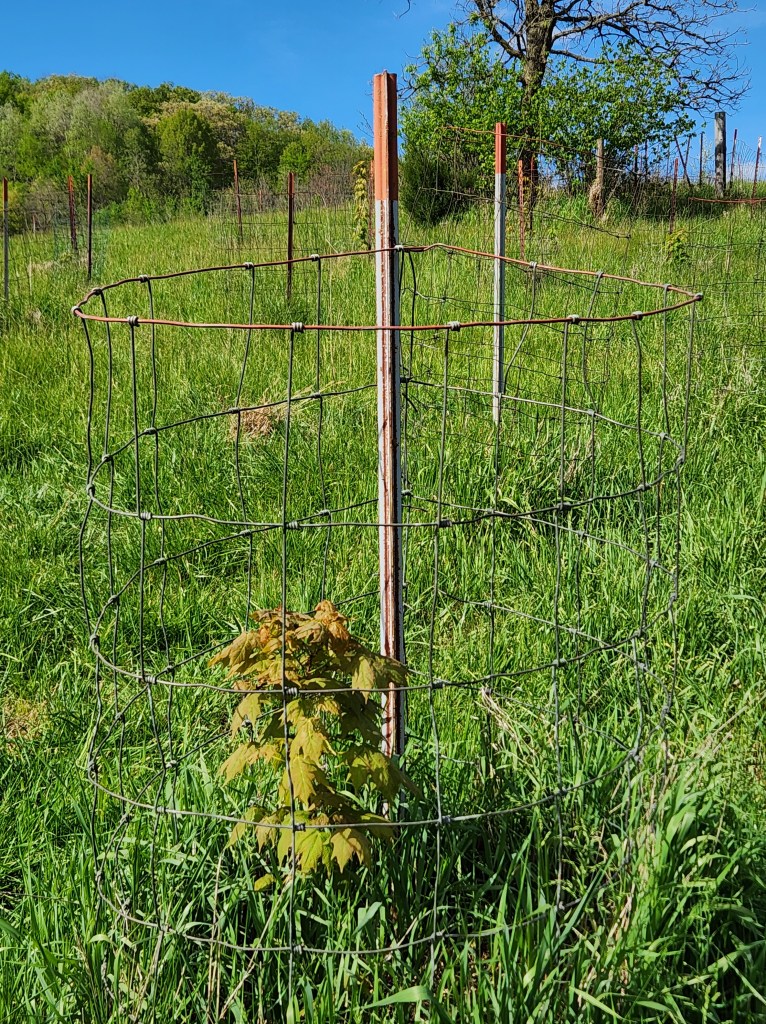
This year we chose trees that have life spans of 200 to 300 years, hickory and chestnuts. Their nuts may begin producing in five to ten years. The healing of the land continues. Over time I’ve learned that the deer will mow down every unprotected sapling. Wire fences work great, until the rabbits teach you how much they love to girdle the young fruit trees. So now another layer of protection is required to ward them off until each marvelous breathing tree is capable of withstanding the onslaught.

And this is the resilience and the persistence we need. We live in a time of reckoning. From the moment colonizers landed on Turtle Island, as Indigenous People recognized North America as Turtle Island, there has been a rush of exploitation of land, water, and people. This finite approach toward living is reaching its zenith and a swift fall will follow. Those in control who are willingly ready to destroy the earth and have no compassion for any being living here are outnumbered and soon will be outflanked.

Let us be like water; find a way around the obstacles. Healing is not only possible; it’s joyful.

With each passing year, I fall deeper in love with the forest that will one day be.

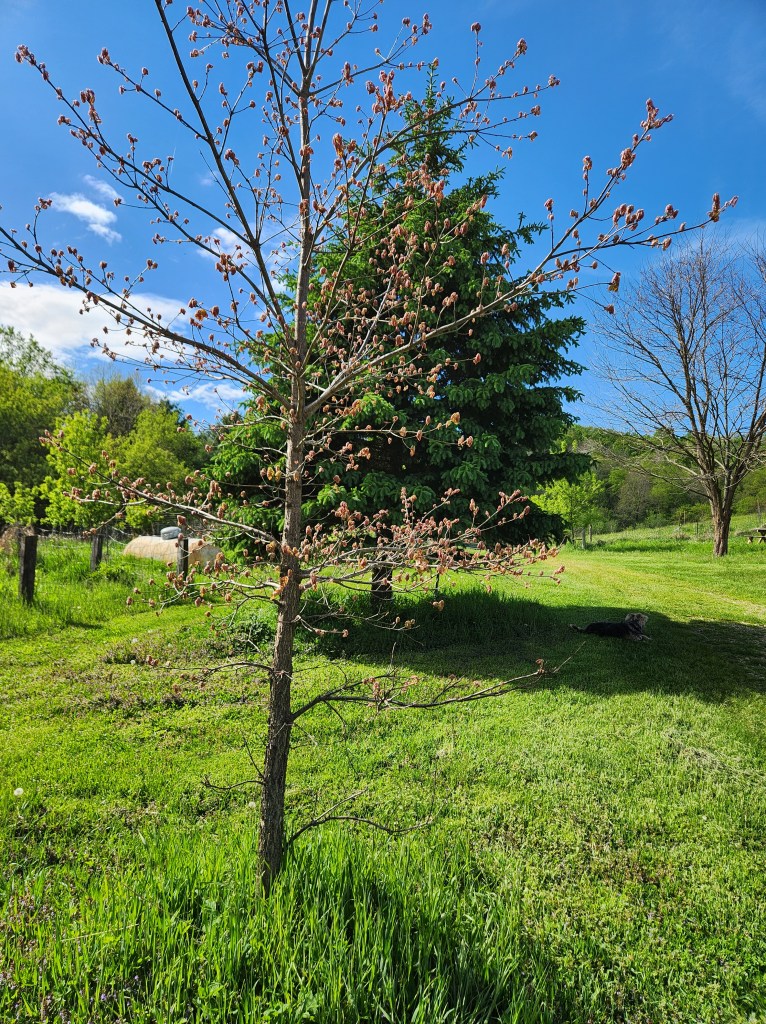
above photo: 25 year old spruce; 15 year old oak

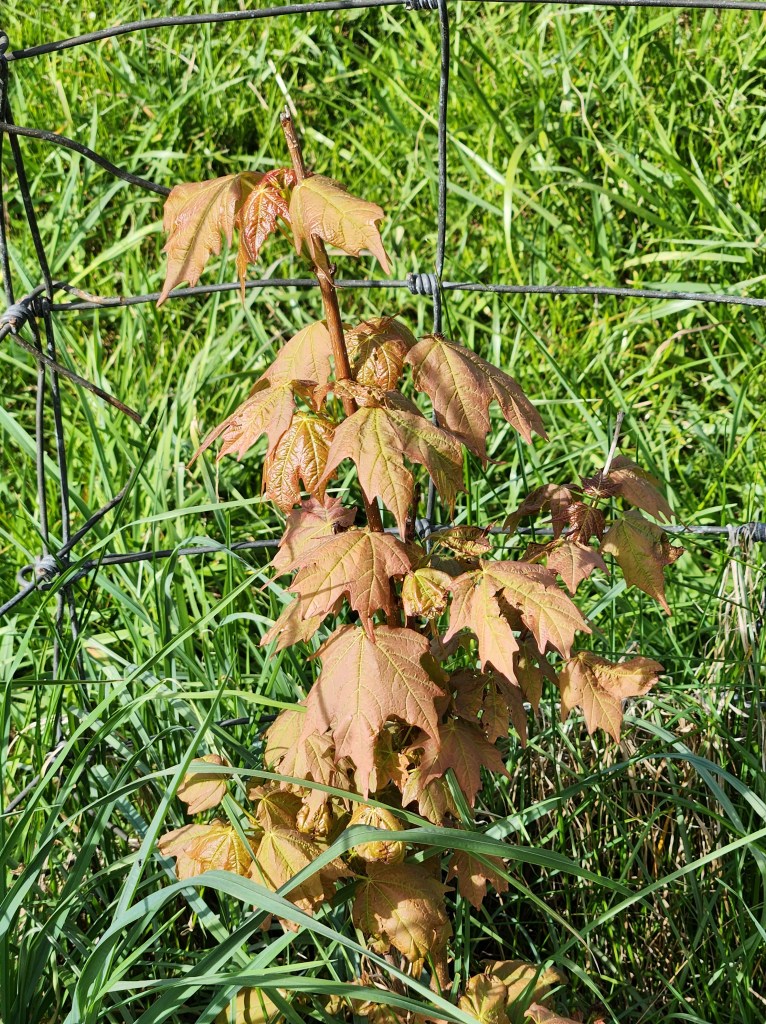
below photo: 3 yer old red maple living in what will become a sugar bush

What Every Gardener Must Know

There are things that show up in your garden that just should not be there. Wisdom tells us to pull weeds or put up a fence to keep varmints out early in the season. If we don’t, the effort it will take at harvest will be overwhelming and disappointing. 

These days I spend cutting wild rose and autumn olive in the orchard. Years ago, someone warned me that the wild rose could take over. I ignored his plea to take action. A little aromatic rose couldn’t be that bad, right? I was wrong. Like grape vine, the tentacles of the wild rose reach into the apple branches and are destructive. They tear through clothing and no animal cares to eat them.

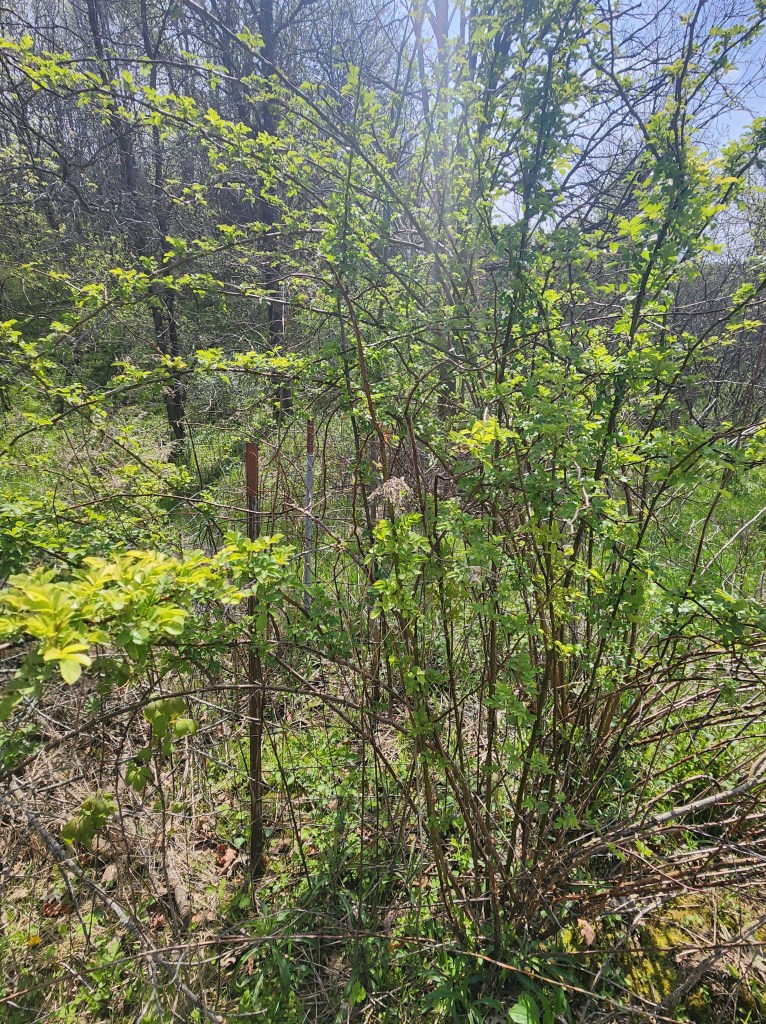
photo: wild rose encroaching on a young oak….but not for long.

Not catching the encroachment of autumn olive on the perimeters was another mistake. Both invasives take their toll on the diversity of indigenous wildflowers and luscious greens. Now as I spend time clearing away what should not have been, I delight in the variety, and the increased abundance of wildlife tells me I am on the right path.  

Another bonus of tending the orchard is the respite from the madness that surrounds us these days. And I have to acknowledge the obvious. The seeds of colonial destruction and the cruelty of capitalism should never have been allowed to take root in the garden of the Americas. 

We must do all that we can, in whatever ways that we can, to stop the encroachment of ignorance into our lives and our communities. Truth telling and not recoiling from the backlash that will surely come is an antidote. Finding like-minded souls willing to forge a new way is essential. And key is the enjoyment of the discovery of what has always been: being human in this glorious home we call earth. 

Hope to see some of you here in Madison on Sunday, May 10, 6 pm. Independent journalism and beloved community. Carry on Amy Goodman!

Be Like Spring

Spring is very clear in its agenda. New buds, new sprouts, new life must emerge past the old, the tired, and the dead. And in its exuberance, Spring is irresistible. The April rains, while a bit pounding this year, have already washed away much to be discarded. It is always exciting to see what has survived and what is being born again. 
And this is as it should be in our lives and in our communities. There are well worn paths that bring us sweet memories and comfort us and there are paths that do not deserve our footsteps. 

These are age old and simple truths: Give way to the new; fears and clinging to the past make us tired and weary.
Be like Spring. Be like the animals and birds shaking off the winter. Enjoy the nourishment that is meant to be savored and is especially gifted to us. 

And how do we know what must be discarded? Beliefs that tie us to separation are not worthy to be kept. Beliefs that cause harm to ourselves and to others should not be entertained.

It’s really very simple to ask, “How does this make me feel?” Anger and hatred consume our essence. The Nature of Spring has no time for this nonsense. It is buoyant with life for the living; and this is how we can be.

If the seasons teach us anything, we know renewal is welcomed. Too many of us, whatever our ages, are missing out on that possibility. Nature is a wonderful teacher. And recognizing we are not separate from her is a worthy first step. 

We live in an amazing area, the Driftless, with boundless springs and streams, forests and fields that wait for our appreciative footsteps to wonder. Let us feel it. Be like Spring.

Embracing Life

Sometimes it takes great courage to get out of bed in the morning. The weight of circumstance has shifted the balance of life. But this is not a time to cower and hide. This is the time to embrace life. 

Spring is gradually replacing winter. That is its nature. And it is our nature to appreciate the warmth and to be amazed at the green sprouting up. My sheep devoured dry hay all winter, now go in search of the moist green shoots and I am happy for them. They are wise. They understand time.

Memories come. Some harsh, some sweet. But can I let go of the bitter, can I accept its teaching and move on? Can I trust that the lesson taught was valuable and that it deepened my capacity to live more fully, or simply regret?

Because true living is not automatic. We are not robots. We have choice. There is nuance. We have the opportunity to discover something new and miraculous with every moment. 

We can bear witness to the power of life, but even more satisfying, we can co-create with it. We can enjoy the dance and allow it to be unique to us. 

I know the weight of circumstance has brought despair. I know it has brought doubt. We are being led by people who have forgotten the preciousness of life. And there are far too many in influential places who echo the insanity of the ignorant. The voice of humanity is being suffocated, but only if we let it. This is where courage comes in. This is where remembrance comes in. Hold those moments close, when you witnessed life’s kindness and beauty. They live within you still.  

We have choice. That is where freedom lives.  Embrace Life and walk away from fear. 

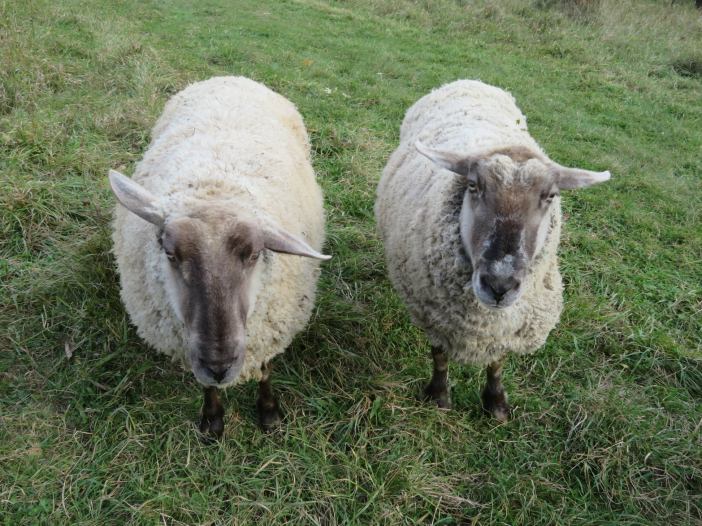
Meet Thelma and Louise. They were the first sheep at Echo Valley Farm. They lived for eighteen years. When I bought them and they went into the back of my SUV, I said “You must be Thelma and Louise – and this is your last ride.” We all lived up to that. Sweet memories.

Every Winter Carries Seeds of Spring

The Return of Light is upon us. People celebrate this season in many different ways yet universal themes prevail: good will to all, sharing abundance, the need for community, and a recognition of life’s evolving seasons.

Solstice, the darkest time of year, is known as a time of reflection and renewal. Some cultures celebrated for as many as fifteen days, coming together for communal strength to face the bleakness of winter. They came seeking warmth, for feasting, to share the stories of their becoming and to illuminate the possibilities and dreams of what may still be.

Winter is known as the oldest season. It’s a time of passing and of death. It reminds us of our finite nature – that as much as we are beings of spirit, we also live in temporal time, with a beginning and an end. We welcome the return of light, but also reckon with endings and the recycling of life. We come together to celebrate and also to mourn. 

Winter, if we allow it, demands withdrawal from frenetic energies so that we may take solace in the quiet stillness that envelops us. And if we are fortunate and can give our attention to it, we’re gifted with stillness within us as well.

Winter draws us inward. It’s this inward pull and outward need for community that instructs us as human beings. It’s the recognition that light will come again and this is not merely a faint hope. It is our knowing. We know the light will come because we have witnessed it. In this way, knowing is a vital human trait that protects us from doubt. Now more than ever we need to wake up to our knowing and to the seeds of becoming that await us. 

In many cultures time was marked by winter, and the questions were asked: “How many winters have you lived?” Or “How many winters have you been a human being?”

This question and recognition of our humanity may be the most important one we can ask ourselves and answer now. As the vestiges of uprightness are being mocked and stripped away, it is imperative for each of us to reclaim the better angels of our humanity. Because we can. Every winter carries seeds of spring. Nurture those seeds.

Not Always As It Seems

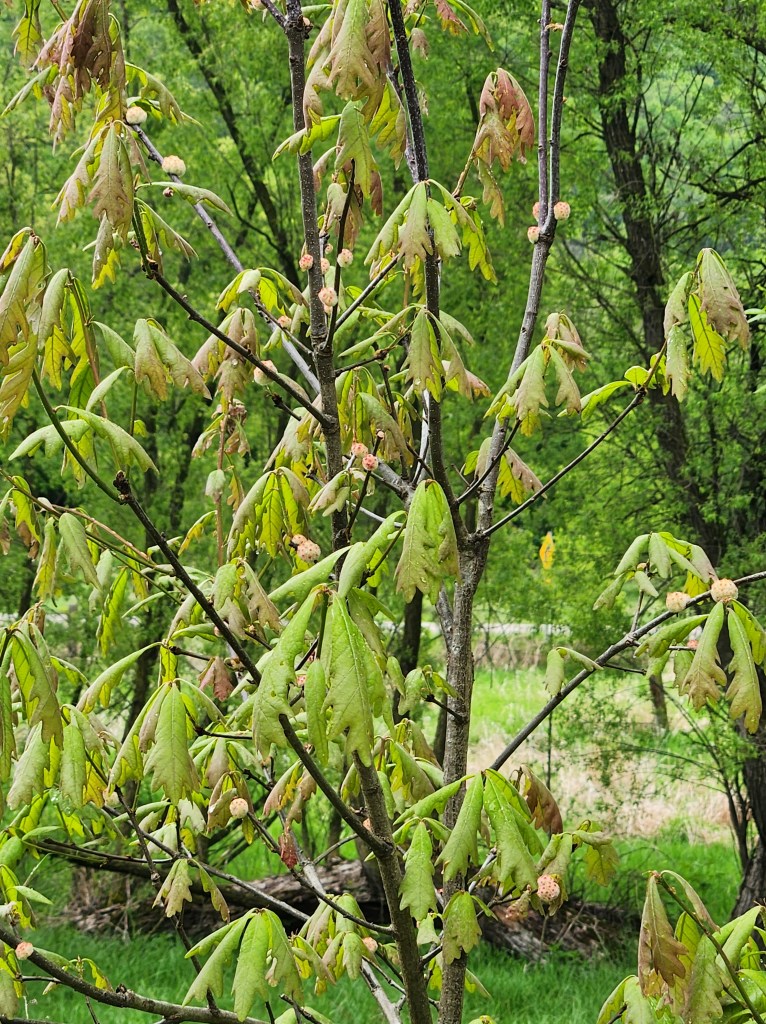
Have you noticed round growths on oak trees? I had seen them a few years ago, and looked them up and promptly forgot what I read. Now they’re reappearing and since we’re trained to be alarmed by the unusual, I began reading up on them again. It turns out most authorities agree they are harmless, just unsightly. But unsightly is enough for many people to seek ways to eradicate them.

Apparently, insects and mostly non stinging wasps lay their eggs on the tree and these balls, or more reverently known as galls, develop like a cocoon to protect and to feed the larva. Once the insects mature and fly the coop, the galls dry and drop from the tree. That is, if human beings can wait that long. Most articles state galls are harmless and then give numerous methods of removal. Some include pesticides.

As someone who’s not willing to sacrifice benefit for unsightly, I kept reading until I found a delightful article on these galls, of which there are many types. This article did not even hint at removal. In fact, it talked about the fun to be had with the galls once they drop. It even explained an interesting human use for the galls. It seems some clever wench about the 4th Century AD found a way to make ink from the gall, combining its acid with iron sulfate and gum Arabic. This amazing discovery was used in the writing of the first Bible and continued on to be used in the writing of the Declaration of Independence. Even the original United States Postal Service used it until replacing gall ink with chemicals.

What can be learned here? Let’s forego premature evaluation based on appearance and stop losing our collective memory to superficiality and looking good. Wisdom, it’s in our DNA. Dig a little.

Caring is an Art

I’ve begun to believe that caring is an art. At its best it’s born out of love. When we care for something, it’s not a selfless act. That’s a misconception we’ve been led to believe. When we care for something, we are extending our gratitude for its existence. 

I’m guessing in days gone by as we survived by what we grew in our gardens or harvested from the wilds, there was a lot more respect and caring for the land. I remember my Dine teacher saying before the Europeans came, no one would have ever thought to pee in the waterways. Let alone destroy the precious and life-giving water for personal gain.

For decades uranium mining on the Navajo reservation contaminated large portions of the water sources and led to kidney diseases and cancers. Today we’re faced with numerous attacks on our fresh water systems. The proposed natural gas plant, the Nemadji Trail Energy Center will be located in Superior, WI. Pipelines will run adjacent to or through waterways and spills are a given, not an exception.

Sign the petition to STOP NTEC. For non-superior residents, as well.

Today I spent time in our old heirloom orchard, cutting back grape vines choking the trees and nipping the early shoots of multi-floral rose. Multi-floral rose sounds like such a nice plant, doesn’t it? But I can tell you the thorns are ruthless as they cling to your clothing and gouge your skin. And nothing eats this plant, not sheep, not deer, no one wants it near-by. So, in an act of preservation of the land, I take to cutting it. 

Spring is coming early this year. Budding trees confirm this. Caring for the land is taking on a whole new urgency as the gratitude for all of it continues to grow.