A Glorious Existence

After a bit of effort, I found the number of an old friend. We hadn’t spoken in a few years and so far we still haven’t, but his voice message made me smile. It was simple. He said, “I hope you are having a glorious existence”.

I had just come in from another foray into our old heirloom apple orchard. My trees have suffered from recent droughts, and truthfully many never fully recovered from the goats we had a while ago. But I heard an apple expert on the radio say that taking off the dead branches and nipping the suckers can give a forty-year-old tree new life. Perhaps another forty. I liked the sound of that.

So, as I wander through the orchard, I wrangle with dead branches and revel when I cut down the vines sucking life from the trees.  The multi floral rose and autumn olive are also threats, and I do my best to remove them, remembering my mother’s words, “Give it a lick and a promise”. It meant that after a quick assessment she would promise to return to finish the task at hand. Today as I was fulfilling the promise, I realized I could spend the rest of my days quite happily wandering through this orchard, caring for the old trees and planting new. 

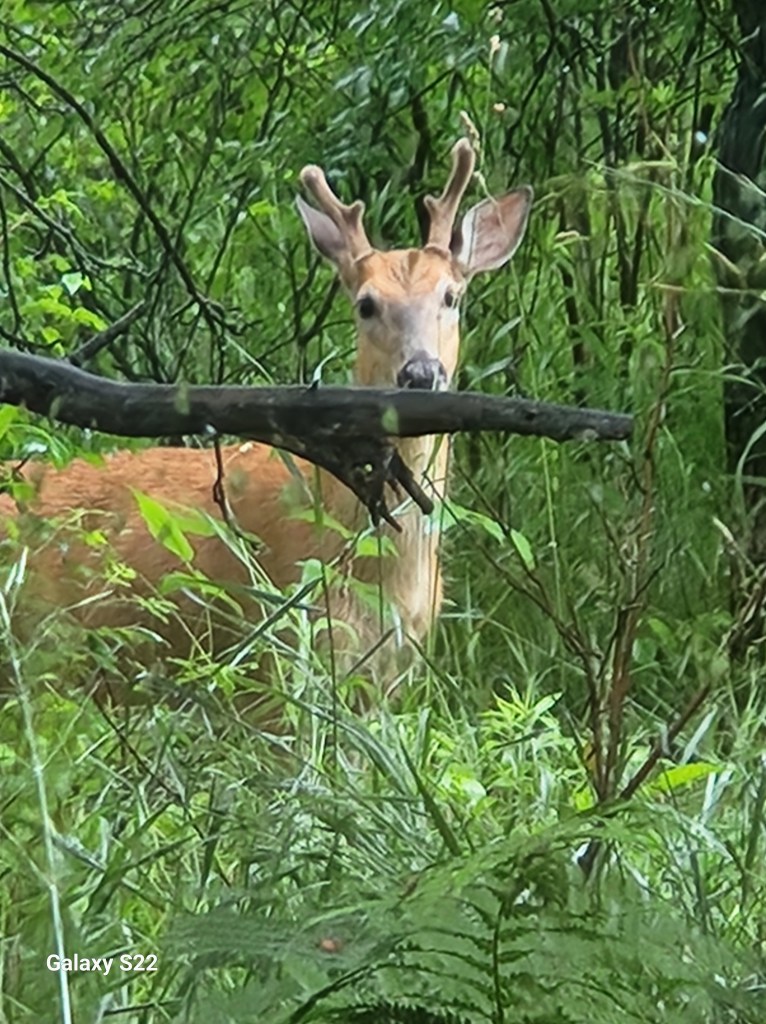
The young saplings don’t always make it. The deer are prolific and eat them if they are not protected. Life has its fragility.

Planting saplings is a promise kept: to see the old orchard carry on. There is something defiantly delightful in maintaining these precious heirlooms. The hybrid ones may be heartier and look prettier, but they will never touch the sweet taste of the cider made from a variety of heirlooms.

So yes, my friend and to all my friends, I am enjoying a glorious existence in appreciation of the life I am being given. And I wish the same for all of you. Bring on 2025!
Forged in Ignorance

Two of the deadliest fires in recorded history were the Midwest’s Peshtigo and Hinkley fires in the 1800’s. The causes of both were attributed to unusually dry weather and reckless industrial behaviors.

The Peshtigo fire swept through northeastern Wisconsin and killed over 1200. It’s believed rail workers began a brush fire that got out of control. Survivors recalled the inferno moved “like a tornado”. 

Following two months of drought, the Hinkley fire raced through Minnesota’s logging areas, killing 418. 

As we await the fate of 1300 human beings unaccounted for in Maui, it’s incumbent for us to understand what went so horribly wrong. 

Maui, like Peshtigo and Hinkley became industrialized. The lands were used for extraction of lumber and in the case of Maui, plantations usurped native lands. Those plantations gave way to hardy and flammable non-Native grasses, and undermined the natural wetland. 

Add drought conditions and the ferocity of climatic winds and the results are devastating.

These disasters were forged in ignorance. They’re the result of economic development that has ignored indigenous people and have ruthlessly devoured native lands. Colonization overruns common sense with political power and capital.  

The roots of these disasters were long in the making and driven by indifference. Today we are living the result of that indifference. But there are hopeful signs. A Montana judge recently handed a legal victory to young activists who sued the state for the right to live in a clean and healthy environment. The argument declared that the state’s support of fossil fuels undermined constitutional rights. The judge agreed. 

Let us be the ones who boldly turn away from ignorance.  Let us return the garden.

For more:

Vegetation Fuels Fires

Maui Was Once a Wetland

The Montana Ruling

Our Children’s Trust

The Peshtigo Fire

The Hinkley Fire

U.S. Coast Guard Hawai’i Pacific District 14: Lahaina, August 8, 202

Breathing as a Priority

The morning sky was cloudy and the sun was fiery red. The air was thick as the winds blew smoke from the over two hundred fires burning out of control in Canada. I thought of the People who had lived long before modern methods of communication and I wondered how they would have perceived this day. Would it have struck fear in them? Would it have generated concern for one another? 

Head aches, raspy throats, blurred vision would surely have signaled some kind of pause, some depth of thinking. Perhaps even some request for help from something Greater.

But we live today and the information highway is overloaded with things to attract our attention. Unless the fires and the smoke directly impact us, it’s easy to become distracted. And for those whose air quality has diminished dramatically, do we even know how to help ourselves? Wearing a mask, staying indoors are the common mitigations, but they do not take on the larger and more implicit need of changing how we live. Cranking up your air conditioner may help in the short run, but what are the long-term damages to the environment using these kinds of solutions?

It’s time we take a pause and really reflect on the current status of the citizens of the earth. It’s time to understand that the perils that affect one, affect all, as we live in our interconnected web of life on this still marvelous planet.

I know I’m moving more slowly these days because it’s all my body can do as the air becomes less friendly and the preciousness of each breath becomes clearer. 

And my hope is that enough of us care to make a change.

********

Air quality below 100 is considered satisfactory. We have been ranging between 170 and greater for the past few days. Madison, WI is at 240 as I write this…

The photo is from our farm at 11 in the morning looking out over the Kickapoo Valley Reserve and Wildcat Mountain State Park.

The Power of Us

It might be time to discover the power of “us”.  We’ve been embroiled in divide and conquer for so long that we have forgotten another path is even possible. Fear of “other” has taken the place of Love thy neighbor.  Sound bites written by powerful agents have replaced common sense. I recently came upon an article about the increased and successful use of heat pumps in Maine. As you may know, heat pumps are the new electrified source of heating and cooling that are being purchased with immense rebates.  This new technology helps reduce our carbon footprint.

What’s our carbon footprint? The oil, coal and natural gas that we burn to produce heat and keep the lights on carries with it a toxicity that is destroying the planet, one pipeline rupture, one train derailment, one flare-up at a time. 

I may or may not be in line for a heat pump, but this article caught my attention. It seems industry moguls are having a hard time adjusting to the fact that people are leaving the fossil fuel industry. Whether due to cost or to save the environment, large numbers of people in Maine are acquiring heat pumps. They are ignoring false threats that heat pumps cannot withstand the frigid temps and other twisted facts bombarding them.

It made me think of our own fact showdown in the Midwest. If your information only comes from Dairyland Power you will believe that solar cannot possibly supply the energy we need. Or you may even succumb to the dangerous narrative that nuclear is not only safe but also necessary.  If this is your thinking, you might consider the sources of that information and who will gain from it.

But more importantly what do we have to lose?

For more information on nuclear power read this from Physicians for Social Responsibility.

Or this on concerns regarding the Point Beach nuclear reactors from the Wisconsin PSR chapter.

Keep the cooperation in coop. Participate in the Vernon Electric Co-ops Annual Meeting, Saturday, March 25.

Step Out of Normal

When I bought this farm 20 years ago, I hadn’t heard of Landback or colonizer. I bought the farm with the idea that it should go on in perpetuity with no more buys and sells, no more profiteering from extraction. I learned from Dine’ friends that land was not mine to own and I respected that understanding.

I was counseled, “Buy the land and it will teach you”, and I have learned from it.

I have learned that the symbiotic relationship with the land is key to understanding my humanity; and that the dance with the seasons is in direct relationship to my understanding of myself as a finite being. The satisfaction and fulfillment I garner is testament to a Greater existence.  And the whole experience is one of beauty and peace, regardless of the difficulties that arise.

I believe the capitalist system has shortchanged our worldview and has cheated us of the most valuable of commodities, our humanity. I’m very grateful to have taken the plunge away from social norms and that very kind people took the time to help me heal. Because stepping out of normalcy is a healing.

It’s not easy to live in a world where bad deeds and actions are legitimized. It’s not easy to force innocents to close their eyes to the horrors of hunger, homelessness and violence. But that is what we do everyday. We teach our children to stuff the question, “Why?” And we carry on with the charade.

This country’s wealth is based on land theft and stripped resources. Trying to rectify poverty or heal generational traumas without acknowledging the assaults of our history will be fruitless.

We’re all damaged by cruelty. We must all take time to heal.

Step out of normal.

Stop Doing Harm

The Climate Summit is underway. The gathering is supposed to allow all countries equal footing to negotiate the perils of climate change. Once again the fossil fuel industry is driving the agenda to continue the abusive use of coal, gas and oil.  And once again governments, who are the greatest emitters of greenhouse gasses, are refusing to wind down.  Climate justice groups are given little space to talk about the need to stop harmful polluting, while fossil fuel industries set up elaborate booths to sell their products. It’s more than a conflict of interest; it’s death by greed.

The request for financial help to repair the damage caused by large polluters is being sidestepped. The request to “stop doing harm” is going unheard. 

The summit is called COP 27. That means for the past 27 years this spin has continued while our overuse of fossil fuels impacts the climate and adversely affects our health. 

So when I learned about our school district receiving grants and loans to do a makeover, I looked to see if there were plans to use renewable energy. There were none. The plans are for larger spaces that will require more energy. 

And energy costs are rising and will continue to. Taxpayers will foot the bill for the construction AND for the operational costs. That figure was left out the planning as well. 

The Inflation Reduction Act is ready and waiting for makeovers like this one. Switching to renewables in this moment makes total sense.

I can’t be at COP 27, but I can make my voice heard and I did. I will not be voting to approve the plans for the school makeover unless renewable energy is used. It’s time to stop doing harm. We can.

Photo from an article Misconceptions about solar energy

Thanks to Edward Kimmel via Wikipedia Commons for the image of the sign from the 2017 Climate March in Washington, DC. Licensed under Creative Commons Attribution-Share Alike 2.0

Why do we keep allowing the fossil fuel industry to call the shots?

VANESSA NAKATE to Democracy Now: Well, apparently, we have more than 600 fossil fuel lobbyists at this COP, and yet so many communities and activists from the frontlines of the climate crisis weren’t able to make it here. There is a quote that I read recently that said, “If you’re going to discuss about malaria, do not invite the mosquitoes.” So, for me, it’s a worry that we have over 600 fossil fuel lobbyists in this place. It’s a worry for our future. It’s a worry for our planet. It’s a worry for the people.

Shinrin-yoku

Took a drive to Iowa to hike the state parks around the Mississippi. Most of the land is overly manicured with the exception of abundant trees still standing in the parks. Immense mowed lawns and fields of corn leave most of the area treeless. Not understood is the significance of bio diversity, or of how trees clean the air and help prevent flooding.  They clearly have forgotten the wisdom of shinrin-yoku – the Japanese word for forest bathing. 

Don’t get your knickers in a twist, it doesn’t literally mean bathing. It refers to the process the human senses enjoy when in the company of trees. We shouldn’t require science to tell us we need to spend time soaking up Nature or reveling in a forest – but here we are. 

To many of us, trees are a commodity or a nuisance. Even as the earth struggles to breathe, we continue with greed and ignorance to destroy her. It is time to rethink the importance of trees.

I have fond childhood memories of the pine, apple and mulberry trees in our yard before my mother deemed them a problem and had them removed. Or the shock of learning of Chairman Mao’s “First Cutting”, the removal of China’s trees to hasten their industrial age. It took a bit of travel in Guangzhou to get to an island of trees left untouched. I still remember the feeling of ease walking among them. 

They say, “You can’t keep a man from making a living”. This is the cry of people who would have us believe the almighty dollar is more important than well-being.  It stems from an inherited belief in the right to harm. It is the same shortsightedness of ancient Easter Islanders and the calamity (which included rats) that brought a civilization to its end. 

We can do better.

The lead photo is from Maquoketa Caves State Park in Iowa

Nearby you will find the lovely Hurtsville Interpretive Center

And this photo of the Mississippi from Bellevue State Park

More Thinking, Less Bureaucracy

With the influx of city dwellers fleeing the urban jungle, and farm acreage being cut into bite sized pieces to accommodate, sewage and wastewater are in the spotlight. Whether a holding tank or a septic field, there’s often a lot more going down then simply number one or number two. Household cleaners, toxic chemicals and now PFAS – known as “forever chemicals” are turning up in our sludge. 

OK you say, but the truck sucks it up and takes it away. Ah, but there’s the rub. Where is it taken?  The EPA will tell you more than half of all sewage sludge is spread on farmlands. And studies are showing farmers and farm workers are paying the price, not to mention the animals and humans who are eating from those fields or drinking from contaminated wells.

Organic standards do not allow the use of sewage sludge to be used as fertilizer. That’s one remedy. We have become very good at mitigating problems at there end point, but we have a long way to go to stop the very egregious actions that are creating the mess in the first place. 

The state is becoming hyper vigilant in demanding every household be responsible to contain waste, while big polluters are given a pass. Simple composting and greywater systems which could offset waste are not permitted or are enforced in such a way that they still end up in the toxic stew scattered over farmlands. We’re not thinking this through.

Stop the production of PFAS, reduce the amount of chemicals being created and used, and allow common sense to return. We’re still living as though we have not heard that the earth is warming at an alarming rate, or that we could play a part in protecting it. 

Biosolid Map: The spreading of wastewater sludge (biosolids) on agricultural land, a common practice dating to the 1980s, is concentrated in the eastern U.S. where groundwater depth is relatively shallow, raising concerns about widespread PFAS contamination affecting drinking water. Source: EPA webinar, “PFAS in Biosolids,” Sept. 23, 2020.

Here Comes the Sun

If you’re thinking of putting up a home solar array in 2022 you will qualify for the 26% federal solar tax credit. That credit will drop to 22% in 2023 and will conclude in 2024. 

For those tempted to take the solar plunge, learning about your energy use and your energy waste are perhaps the most important considerations. Reading your monthly statements, understanding your peak times of use, changing to LED bulbs and using energy efficient appliances will dramatically reduce your electric bill.

It’s an exercise in conscious living and it’s very satisfying to your pocketbook. 

Most rural people have forgotten the history of how electricity came to the countryside. It was the establishment of cooperatives that allowed the forgotten regions of this country to obtain electricity. 

Today most are cooperative members, but seldom understand our roles as co-owners. Happy for the lights to go on, we have entrusted the financial workings of the energy cooperatives to boards and stakeholders. As we move to renewable energy, this may be a moment to reconsider inaction and become involved. 

If you’re holding out hope that your energy provider will increase their use of solar and that it will decrease your costs, it’s time to think again. Out of state third party developers are taking advantage of this leap towards solar and are investing in local solar systems. What you aren’t being told is how much you will be paying for this “service” as our cooperatives sign on to contracts that in many cases will outlast our lifetimes. It’s estimated that Vernon County ratepayers export $76 million yearly in energy costs.

So on top of your conscientious reduction of energy waste, it’s time to let your coop board know that you would prefer to keep our dollars local. 

For a great presentation by Vernon County Energy District members Samantha Laskowski, Kaila Wilson and independent solar enthusiast, Rob Danilelson, click here.

Inherit the Wind

For those not paying attention: The earth is undergoing traumatic change. Debates can rage, but facts are undeniable. We’re having one of our driest years. A few years back the waters raged. These are the fluctuations predicted for us. Our terrain gives way to a downward flow but history has informed us trees and grasses play a significant role in slowing the floodwaters when they do arrive.

Wood is at a premium right now. And taking down mature forests make sense to the pocketbook, but little sense when we consider trees’ advantages.

Trees give us oxygen and improve the air we breathe. They sequester carbon, preserve soil, conserve water and support wildlife. Not to mention the joy of a swing and other childhood memories they provide. 

I’m not a gambler, but taking into account climate swings, odds are pretty good that we will have some heavy rains and flooding in the not too distant future. People living in valleys are particularly aware of the dangers of fast moving run-off.  

If you’ve driven around lately, you can see that short-term gain is winning and old growth trees are coming down. The mills are loaded and “useless” treetops are an ugly sight on our hillsides. While I understand the need to survive financially, I must wonder why we cannot find better ways.

I know I’ll hear, “I can do what I want with my land.” Unfortunately that is true. No one can make anyone care about consequences to wildlife or to the future of our grandchildren’s children and what they will inherit. But we can try.

Every January Vernon County’s Land and Water Conservation offers a sapling sale. Plant a few. It’s not a solution to the destruction but may lessen the loss of desperately needed trees. 

The concept of “Inherit the Wind” is from Proverbs chapter 11, verse 9 “He that troubles his own house shall inherit the wind…”

It is also a great 1960 movie, Inherit the Wind, depicting the 1920’s school teacher, Bertram Cates who is put on trial for teaching evolution instead of creationism.