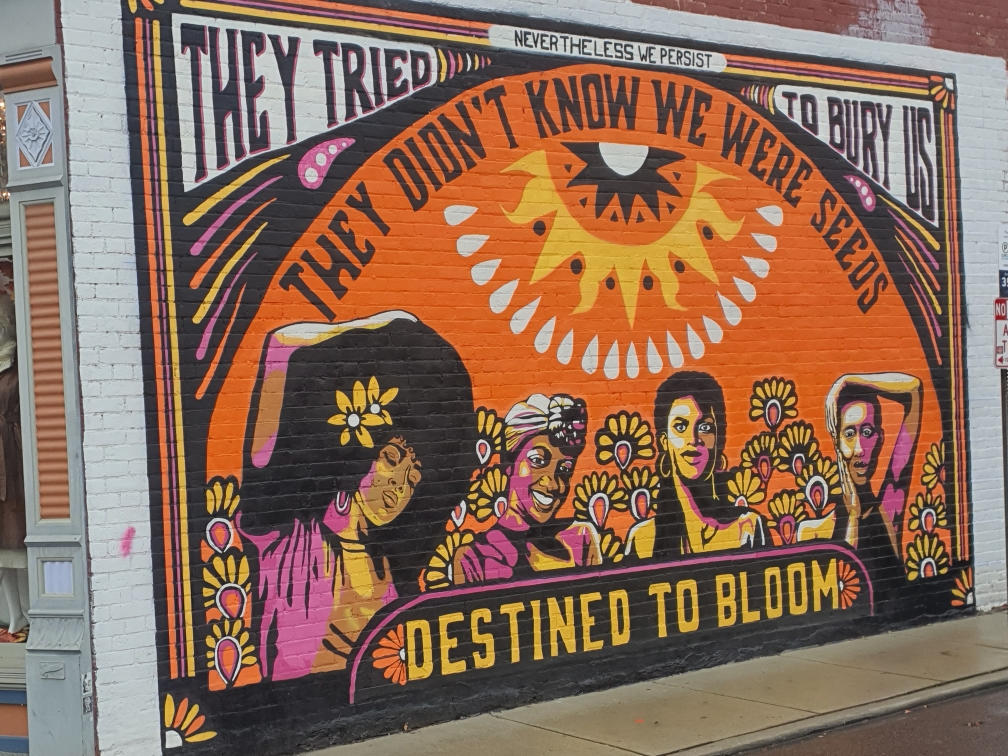
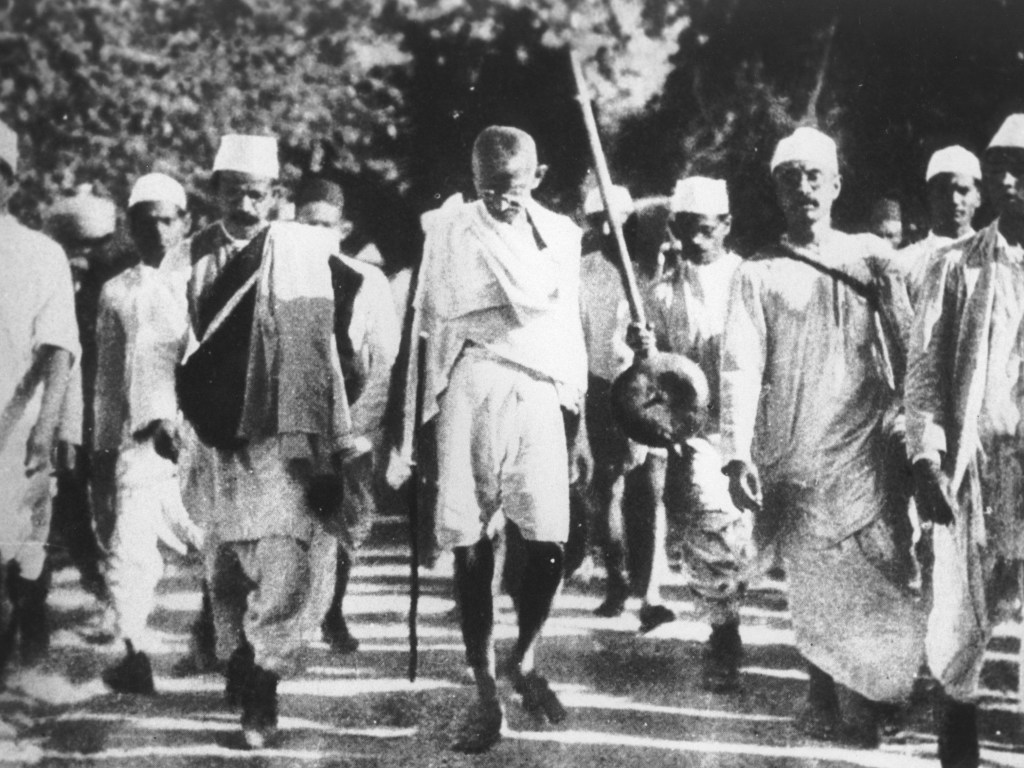
Peace Day. Every Day.

I was invited to speak at a celebration honoring the International Day of Peace. Here is an excerpt:

Since 1981, when the United Nations declared Sept 21 as the International Day of Peace, people from around the world have gathered to lift up, unite around, and sometimes, demand peace. 

On these celebratory days, people have been asked to consider aspects of peace: ending racism, ending poverty, forgiveness, dignity for all, uniting for peace, ceasefires and more… yet peace has eluded us.

Or has it? People often say, “I love the peacefulness of nature”. They might even say, “I find myself there”. There are places, books, works of art and many beautiful things that touch us. One friend told me she had an experience of peace as she touched the Wailing Wall in Jerusalem. She went on to say that that one moment of peace satisfied her for a lifetime. This is not true for me. I find myself needing to feel peace every day. 

So we are unique as we meander through life and there are triggers that help us touch the feeling of peace, but I would say to you, peace is not inherent in that place or object or even person that touches us, peace is something that lies within each and every one of us. It stands on its own merit. It resides within and within is where we feel it.

And I would suggest to you that that is precisely why international or world peace has eluded us. Simply put, we are looking for peace in the wrong place. We put a tremendous amount of energy to try to change the outside, without first becoming cognoscente of the power we already have.

We all know and love the saying “peace begins with me”. But do we believe it?

Have we tapped the peace within us, have we consecrated it? Or, have we understood that it consecrates us? Consecrates us…transfers the power of the sacred to us.

Have we understood and accepted the sacred nature of peace? Do we recognize peace as the most powerful tool in our arsenal against ignorance and hatred? 

These are important questions.

One of my favorite quotes is by Audre Lorde, and I am paraphrasing here, “ You can’t dismantle the master’s house, using the master’s tools.”*  We cannot and should not fight fire with fire. If we are to have a legacy of this day and of our lives, why could it not be that we have put down the master’s tools of battle, of anger, of hatred, of ignorance and have instead reached for the greatest tools we have.

It is time we stop giving lip service to peace. Peace does not need us to champion it. Peace needs to be felt and from that feeling, purposeful action can and will arise.

If we have not yet recognized this fundamental point, we need to begin. And today is the best day to take stock of our most valuable gift. Peace. Call upon it. 

We need to stop acting like peace is something elusive and we must allow it to be tangible and real in our lives. 

This year the theme for the International Peace Day is “Actions Towards Peace”. It is directed to each individual, not to a government or any other agency. The request is that we all become Peacemakers.

So now the questions before us are: What are we doing to initiate peace?

And more importantly will we take the time to know what peace truly is?

Doubt is a horrible human disease. It causes us to falter when there is no need to falter. It robs of us life’s sweetness. It is said, no two things can occupy the same space at the same time. Let this be the time that we remove the doubt and replace it with knowing. Let us all begin that journey. Let us all know peace.

Thank you to Unity of Appleton for the opportunity to speak.

  • Full quote of Audre Lorde: “For the master’s tools will never dismantle the master’s house. They may allow us to temporarily beat him at his own game, but they will never enable us to bring about genuine change. Racism and homophobia are real conditions of all our lives in this place and time. I urge each one of us here to reach down into that deep place of knowledge inside herself and touch that terror and loathing of any difference that lives here. See whose face it wears. Then the personal as the political can begin to illuminate all our choices.” 

Here’s to Human Dignity

On Monday, we drove to Madison for Laborfest. It was a celebration of workers rights and a call for workers’ justice. Though the temperatures were in the nineties, the place was bustling with unions, students and organizations all championing labor, all trying to impress upon us the very real need to respect and give dignity to those who are the ones keeping it all going. 

I enjoyed seeing old friends, all activists striving for a better day.

And I appreciated meeting new friends, most young and passionate. It reminded me of younger years as I challenged our government’s choice to war with Vietnam and as I allowed myself to question our role in the overthrow of Salvador Allende. Signing up for socialist information made a lot of sense. Still does if you need a dose of new possibilities.

I grew up in a union enclave. My father and uncles worked union jobs and we lived in the midst of steel mills, glass, paint and lumber factories. Much of that came tumbling down in the late 70’s when the mills left the area for cheaper labor abroad. A lot more changes followed. The playgrounds, swimming pool and other amenities available to blue-collar families disappeared.

The camaraderie that had been forged in our little neighborhoods began to shift as fear of other and “Keeping up with the Joneses” took on whole new meanings. 

It’s not a new story. It’s boringly old. The rich get richer and the poor are told they are poor because they are lazy, or because that’s the way God planned it. There’s nothing new here.

But being with earnest people who know better days are still before us, and that better ways are still possible stirred my thinking and fueled my hope.

Here’s to the rise of human dignity. And to all who champion it!

Wisconsin Network for Peace and Justice

Family Farm Defenders

Worker Justice Wisconsin

Try To Care

On September 30, federal child-care support ends. It’s projected over 70,000-child care programs will close due to lack of funding. More than three million children will lose their care. The effects of this lack of funding will reverberate throughout the workforce as parents make the harsh choices of needing to leave work altogether or to dramatically cut their work hours. Facilities will close and worker’s livelihoods will be terminated.

And who will suffer most? The children. Yes, studies show that businesses will suffer, our economy will suffer, but our future will suffer the greatest threats as we abruptly halt the lifeline of support to those who are the neediest: our children.  

This is something we cannot afford. Far too many of our children are still rebounding from the effects of the pandemic. To force them into further hardship at this time is inhuman.

Our federal defense spending is greater than all of our programs to assist low-income people. These include: SNAP, school meals, low-income housing and childcare assistance. We spend more on military might than on ensuring everyone can pay their energy bills or on programs to aid abused children.

Now on September 30th we will end childcare support. What signal are we giving the future leaders of our land? We are effectively saying, “We do not care about you”. When the youngest are abandoned surely that is a sign that the society has truly gone mad. 

People squabble over the two party system, which is the better party? Which approaches are the right ways to go? But I’ll tell you this: a government or lack thereof is the result of people who do not care.

“Kids at Daycare” is a Creative Commons, attribution 2.0 license

How can we not care?

Entrapment

A friend calls it psyhological entrapment. What amounts to a total disregard of process and environmental concerns, Minnesota Power recently signed a labor agreement with the Northern Wisconsin Building and Construction Trades Council to build a $700 million gas-fired power plant in Superior next spring.

The Nemadji Trail Energy Center was proposed in 2017 and has failed to secure the permits necessary to begin construction. Environmental groups have issued warnings and legal challenges, but apparently lobbyists for fossil fuels operate in a vacuum.

The generating cooperative, Dairyland Power, boasts that this plant will help us towards a “clean energy future”. They’re certain most people will accept the words “clean energy” and call it a day. They’re hoping ratepayers will ignore the price tag as well as the increased amount of energy required to run the plant. They’re hoping the calls for protecting the water; the people and their ancestral homeland by the Red Cliff Band of Lake Superior Chippewa will fall on deaf ears. They have not yet understood environmental justice or human rights.

The fossil fuel industry distorts facts regarding renewables and battery storage as insufficient. They dismiss the science that tells us there’s no more time to waste as we continue to extract resources from the earth. They ignore the health risks associated with methane emissions and burst pipelines. And they’re tying our children’s children to unsustainable systems. 

What could possibly go wrong building a natural gas plant along a wetland corridor of the Nemadji River?

Had enough of entrapment? Contact your local cooperative (Vernon Electric Cooperative) or utility or contact Dairyland directly at 608-788-4000. Let them know where you stand on this ill-fated energy center.

The following is a fact sheet from Sierra Club

Forged in Ignorance

Two of the deadliest fires in recorded history were the Midwest’s Peshtigo and Hinkley fires in the 1800’s. The causes of both were attributed to unusually dry weather and reckless industrial behaviors.

The Peshtigo fire swept through northeastern Wisconsin and killed over 1200. It’s believed rail workers began a brush fire that got out of control. Survivors recalled the inferno moved “like a tornado”. 

Following two months of drought, the Hinkley fire raced through Minnesota’s logging areas, killing 418. 

As we await the fate of 1300 human beings unaccounted for in Maui, it’s incumbent for us to understand what went so horribly wrong. 

Maui, like Peshtigo and Hinkley became industrialized. The lands were used for extraction of lumber and in the case of Maui, plantations usurped native lands. Those plantations gave way to hardy and flammable non-Native grasses, and undermined the natural wetland. 

Add drought conditions and the ferocity of climatic winds and the results are devastating.

These disasters were forged in ignorance. They’re the result of economic development that has ignored indigenous people and have ruthlessly devoured native lands. Colonization overruns common sense with political power and capital.  

The roots of these disasters were long in the making and driven by indifference. Today we are living the result of that indifference. But there are hopeful signs. A Montana judge recently handed a legal victory to young activists who sued the state for the right to live in a clean and healthy environment. The argument declared that the state’s support of fossil fuels undermined constitutional rights. The judge agreed. 

Let us be the ones who boldly turn away from ignorance.  Let us return the garden.

For more:

Vegetation Fuels Fires

Maui Was Once a Wetland

The Montana Ruling

Our Children’s Trust

The Peshtigo Fire

The Hinkley Fire

U.S. Coast Guard Hawai’i Pacific District 14: Lahaina, August 8, 202

Stories We Refuse To Hear

It’s August and commemorations of the bombings of Hiroshima on August 6, 1945 and of Nagasaki three days later honor the lives lost. We’re reminded of the gruesome destruction and the inhumanity released on the world through the atomic bomb.

Podcasts and radio raise the voices of survivors and the unanswered debate lingers: Wasn’t the carnage of Hiroshima enough? Why did the US bomb Nagasaki?

As a youth I was taught the United States won the war and saved lives through the use of nuclear weapons. I don’t recall learning much about horrific annihilation. And I can assure you I never learned about Malcolm X, Martin Luther King, Bayard Russell and W. E. B. Du Bois speaking up for nuclear disarmament or ending nuclear testing. Nor was I aware of the racial connections they drew as they warned against the use of the bomb in Vietnam and Korea.*

While we all knew the first atomic bomb test happened in New Mexico, we’re only now learning that generations of families living near the test site are still haunted by cancers linked to that initial explosion. We were not taught that the government did not take the time to warn residents about what was coming, nor did they ever document the after effects. We can thank concerned citizens and family members for that research. 

I ask myself, what will it take for people to end this nightmare of nuclear war? We fear it. Yet we continue to glorify war and refuse to find peaceful solutions. We teach our histories of omission and refuse to take responsibility for guiding our government to a new direction. Abolition of violence, in our selves and in our world, still waits for us.

This is the map of the first atomic test site in New Mexico known as Trinity. https://en.wikipedia.org/wiki/Trinity_(nuclear_test)

*https://www.zinnedproject.org/if-we-knew-our-history/web-dubois-coretta-scott-king-ban-the-bomb/

Love as a Wake Up Call

The further we’ve removed ourselves from living naturally on the earth, the more the earth is challenging us to rethink our choices. And the choices keep coming. We’re over mid-way through this year and the natural disasters have increased worldwide. https://en.wikipedia.org/wiki/Category:2023_natural_disasters

So far we are in mitigation mode. We seek to reduce the severity and the painfulness of what is occurring. But mostly we rely on blind hope. We hope it is all an anomaly. We hope the facts are all wrong. We hope it doesn’t happen to us or at least not to anyone we love.

We hope our money holds out. We hope our air-conditioning does, too. We’re so busy keeping the ship afloat we seldom look to see how those around us are faring. 

Mitigation and hope will fail us. Sorry to be the bearer of bad news, but if you want to find solutions you have to step off the merry-go-round of distraction and roll up your sleeves.

If you are not growing some of your own food or helping others grow food, you are, minimally, out of step. If you are not seeking to reduce your consumption of energy – particularly of fossil fuels, you are a significant part of the problem. 

And if you’re not connecting with local partners to create local solutions, stop further pollution, and move towards renewables, you’re not even in the boat.

Get on board! Everyone can do SOMETHING.  Wake-up calls have come and gone. For me that call comes in the form of Love. Appreciation for the Earth and for one another gives me the courage to try. And clarity tells me all things are possible. 

A mega-transformation is needed. Let’s get on with it.

Teach Forbearance

“To live and let live” is a proverb worthy of remembrance. As our homogenized society moves further from acceptance and more towards fear, it’s not lost on me that it took four white guys to write a song about violence now dominating the charts. “Try That in a Small Town” is the latest assault on human dignity. With worn and tired lyrics it boasts about guns and small town boys sticking together.

But one of the giant omissions of this mess of a song – and there are many – is that it champions a dying breed.

When we are told “the west was won”, it’s with this kind of swagger. The bravado is used to hide the truth that the west was stolen at the cost of indigenous lives and ways of being. These whitewashed storylines creep into our discourses today with the latest out of Florida introducing a curriculum espousing that human beings benefitted from being enslaved.* 

Really? What sickness is this that continues to dominate the airwaves and receives so much support? 

I haven’t watched the video of the song. I read the lyrics and that was enough.

Sing and make some money fellows. The tide is turning and your chest thumping proves it. You’re not striking fear; you’re inviting resistance. And how will that resistance look? Like the colors of the rainbow we will rise and envelope you. We will plant gardens where you poisoned the soil; we will restore the waters until they are pristine again.

Most importantly we will teach love and forbearance and if you are fortunate, we will forgive you.

**********

And if you want a deeper dive into Florida’s latest controversy: https://www.politifact.com/factchecks/2023/jul/24/kamala-harris/do-Florida-school-standards-say-enslaved-people/

Demand Dignity

In a recent conversation with SAG-AFTRA President Fran Drescher, Bernie Sanders remarked that he’s never heard the word dignity being expressed by more working people than now. That would be a lot of working people over a lot of decades for Bernie.

Regardless where you stand on the political sideshow, it’s refreshing to hear the words, “We need to be treated with dignity.” To hear them spoken in so many sectors is the kind of echo chamber I’m happy to support.

If you threw out your TV or don’t have a subscription to a streaming service, you might have missed the latest attack on the working class. It seems the Actors Guild contract of the ‘60’s didn’t take into account the new devil in the details, streaming subscriptions. No longer does viewer appreciation make a difference whether a show stays or goes; now it’s all about subscriptions. The willingness of corporate greed to steal the efforts of writers, actors and producers is further undermined by the new cult of AI. 

Seems we’re happy to replace real intelligence with the artificial thing.

As compelling is the case that working folk get their due and dignity, so is the reality that if more people do not get on board with #unionstrong, the outcomes for the working class will diminish. 

A bit more compassion, a whole lot more empathy and a ton less greed will put a Band-Aid on this capitalist nightmare. It might even improve the mental health of the citizenry and bring hope back to our youth. 

Three cheers for the workers demanding dignity. But first and foremost we must all recognize the importance of #unionstrong and stand in solidarity.

*********

I am having difficulty with injecting links, so here are a few I recommend for further reading / listening:

What is SAG-AFTRA? https://www.studiobinder.com/blog/what-is-sag-aftra-definition/

Listen to Frank Drescher’s speech:

Conversation between Bernie Sanders and Fran Drescher: https://fb.watch/lU0uxSnLIL/

Current strikes in the U.S. https://apnews.com/hub/strikes

How Far Are We Willing To Go?

How far are we willing to go to kill? The United States has made the decision to send cluster bombs to Ukraine as part of another 800 million dollar military package.

Cluster Bombs were developed in WWII. They carry canisters of explosives that are designed to detonate on tanks and hard surfaces, but they do not always detonate on contact. There are fragments of cluster bombs used in Vietnam that are still killing and harming people decades after they were used. 

More than 120 countries have banned them. The US, Russia, Ukraine and Turkey did not sign on to ban them and they have been widely used during the war in Ukraine by both sides. 

Most allies are balking at the decision. Canada, New Zealand and Spain have doubled down on their support of the ban. Others support the US decision yet choose for their own countries to honor the ban. We are becoming the world’s henchmen.  (https://www.bbc.com/news/world-us-canada-66144153)

As this proxy war continues and Ukraine is dismantled, the question becomes how many of the millions of displaced people and refugees will be willing to return at the war’s end? An estimated 17.6 million people living in Ukraine will need humanitarian assistance this year as the war carries on. (https://www.bbc.com/news/world-europe-61778433)

Our citizenry needs to decide where we stand.

How far are we willing to go to support death and destruction?

Are we too weak to demand a peaceful resolution? 

Or are we too cynical to believe it is possible?

Our collective inability to redirect our government from war to diplomacy, and our refusal to halt shipments of weapons weighs heavily upon us.

How far are we willing to go?

Let your elected officials know where you stand, sign here: https://afsc.org/action/tell-congress-dont-send-cluster-munitions-ukraine

For more:

A B-1B Lancer drops cluster munitions. The B-1B uses radar and inertial navigation equipment enabling aircrews to globally navigate, update mission profiles and target coordinates in-flight, and precision bomb without the need for ground-based navigation aids. (U.S. Air Force photo – Public Domain)

Top photo: March 1991 unexploded cluster bomblet in a tarmac in Kuwait, photo: Johnny Saunderson compliments of creative commons licensing